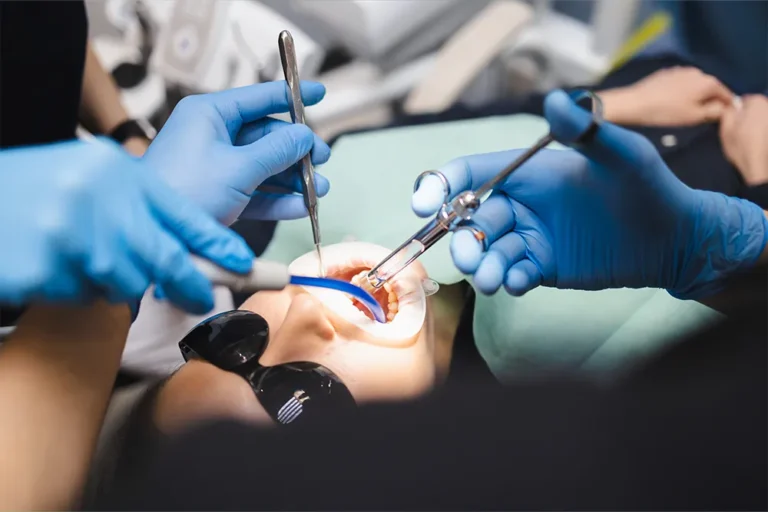
Dental Treatment Adjustments for Long COVID
$10.00
Course Overview
Long COVID, also known as post-acute sequelae of SARS-CoV-2 infection (PASC), describes a complex group of symptoms that persist for weeks or months following the initial recovery from COVID-19. These symptoms can affect multiple organ systems and significantly impact quality of life. For dental professionals, understanding how Long COVID manifests and how it may influence patient care is essential to ensuring safe, compassionate, and effective treatment.
Patients recovering from COVID-19 may experience chronic fatigue, shortness of breath, altered taste and smell, headaches, and cognitive impairment, all of which can interfere with their ability to undergo dental procedures comfortably. Because dental visits can involve stress, airway management, and extended chair time, clinicians must adapt protocols to accommodate these lingering symptoms.
This course provides an in-depth exploration of Long COVID, emphasizing its systemic impact, clinical presentation, and the dental implications that arise from it. Participants will learn to assess patient risk, adjust treatment approaches, and implement care strategies that support the health and comfort of individuals affected by this post-viral condition.
Learning Objectives
After completing this course, participants will be able to:
-
Identify the most common systemic symptoms and manifestations of Long COVID.
-
Conduct thorough medical risk assessments and patient history reviews related to post-COVID conditions.
-
Modify dental treatment plans to address fatigue, respiratory compromise, and cardiovascular variability.
-
Recognize when collaboration with a physician or medical specialist is appropriate.
-
Apply up-to-date infection control, scheduling, and communication practices for patients recovering from COVID-19.
-
Demonstrate empathy and patient-centered communication that fosters trust and compliance during care.
Related Courses
2 Hour Infection Control
$10.00|2.0 CEU|120 min
2 Hour Infection Control
Course Overview
Infection control is a foundational responsibility in dental practice, directly impacting the safety of patients, clinicians, and auxiliary staff. This course provides a comprehensive review of current infection control principles as they apply to dentistry, including the science of disease transmission, the hierarchy of disinfection and sterilization, and the classification of instruments and clinical surfaces. Participants will gain a clear understanding of key pathogens of concern in the dental setting—such as Mycobacterium tuberculosis, hepatitis viruses, and HIV—and the rationale for core protective measures, including immunization against Hepatitis B and strict adherence to standard precautions.
Building on these fundamentals, the course offers detailed, step-by-step guidance on implementing aseptic technique throughout the dental office and laboratory. Topics include appropriate use of personal protective equipment, hand hygiene protocols, operatory setup and turnover, instrument processing workflows, and the selection and use of chemical disinfectants. Special attention is given to the sterilization and maintenance of handpieces, management of suction systems and dental unit waterlines, safe handling of radiographic equipment and impression materials, and proper segregation, treatment, and disposal of contaminated waste in compliance with regulatory standards.
Finally, the course addresses the ethical and legal dimensions of infection control, particularly as they relate to the care of patients with HIV and other infectious diseases. Real-world case law is reviewed to clarify professional obligations, anti-discrimination requirements, and the importance of consistent, documented protocols. The curriculum concludes with practical office and laboratory checklists, along with strategies for communicating infection control procedures effectively to patients and team members, ensuring both regulatory compliance and a high level of trust and confidence in the dental environment.
Learning Objectives
After completing this course, participants will be able to:
-
Define and accurately use key infection control terminology, including sterilization, disinfection, standard precautions, critical and semi-critical instruments, and levels of disinfection.
-
Describe the modes of transmission and clinical significance of major pathogens relevant to dentistry, including Mycobacterium tuberculosis, hepatitis B and C viruses, and HIV.
-
Explain the rationale for Hepatitis B vaccination in dental personnel and outline appropriate post-exposure management and follow-up.
-
Select and correctly utilize personal protective equipment (PPE)—including gloves, masks, protective eyewear, and clinical attire—based on the procedure and anticipated exposure risk.
-
Implement evidence-based protocols for operatory asepsis, including surface barriers, environmental surface disinfection, management of spills, and regulated waste handling in compliance with local regulations.
-
Design and maintain an effective instrument processing workflow, from presoak and ultrasonic cleaning through packaging, sterilization, and biological monitoring (spore testing) for various sterilization methods.
-
Apply appropriate aseptic techniques for high-speed and slow-speed handpieces, air/water syringes, ultrasonic scalers, impression materials, radiographic equipment, and evacuation systems.
-
Describe best practices for infection control in the dental laboratory, including handling of incoming and outgoing cases, pumice and rag wheel management, and communication of disinfection responsibilities between office and lab.
-
Summarize current recommendations and regulatory expectations for dental unit waterline quality, including CFU/mL targets and options for flushing, chemical treatment, and filtration.
-
Interpret the ethical and legal obligations related to treating patients with HIV and other infectious diseases and integrate these requirements into practice policies, documentation, and patient communication.
Advances in Dentistry
$10.00|2.0 CEU|120 min
Advances in Dentistry
Course Overview
The field of dentistry is currently undergoing a technological and material revolution that is fundamentally changing the way clinicians diagnose, plan, and execute treatment. From the digitization of workflows to the development of "smart" bioactive materials, the modern dental practice is becoming more efficient, precise, and patient-centered. This course provides a comprehensive survey of the latest innovations shaping the industry, moving beyond traditional analog methods to explore the cutting-edge tools that are becoming the new standard of care.
Participants will explore the rapid expansion of digital dentistry, including the integration of Cone Beam Computed Tomography (CBCT) with intraoral scanning for seamless implant planning and the rise of chairside CAD/CAM and 3D printing technologies. The curriculum also delves into the shift towards minimally invasive dentistry, highlighting advanced laser therapies and air abrasion techniques that preserve natural tooth structure. Furthermore, it examines the emergence of Artificial Intelligence (AI) as a diagnostic aid, helping clinicians identify pathologies with greater accuracy and consistency.
Beyond hardware and software, this course investigates the biological advancements in restorative materials. It covers the transition from passive, inert materials to bioactive formulations that actively stimulate remineralization and healing. By understanding these developments, dental professionals can enhance clinical outcomes, improve patient comfort, and ensure their practice remains competitive in an increasingly high-tech healthcare landscape.
Learning Objectives
After completing this course, participants will be able to:
- Describe the workflow and clinical benefits of integrating CBCT and intraoral scanning technologies.
- Compare and contrast subtractive manufacturing (milling) with additive manufacturing (3D printing) in dental applications.
- Identify the indications for various laser wavelengths in both hard and soft tissue procedures.
- Explain the mechanism of action of bioactive restorative materials and their role in secondary caries prevention.
- Discuss the principles of minimally invasive dentistry, including resin infiltration and air abrasion.
- Evaluate the current applications of Artificial Intelligence in caries detection and radiographic analysis.
- Analyze the role of regenerative techniques, such as Platelet-Rich Fibrin (PRF), in wound healing and oral surgery.
- Formulate a plan to implement teledentistry and remote monitoring tools into daily practice.
AIDS: HIV-1 Vaccine Update
$10.00|2.0 CEU|120 min
AIDS: HIV-1 Vaccine Update
Course Overview
Since the discovery of HIV-1, Antiretroviral Therapy (ART) has transformed the disease from a fatal diagnosis to a manageable chronic condition. However, a safe and effective preventive vaccine remains the elusive "holy grail" needed to end the global epidemic. This course provides a comprehensive update on the current state of HIV-1 vaccine research, examining why traditional vaccine strategies have failed and highlighting the innovative approaches currently in clinical trials.
Participants will explore the complex biology of the HIV envelope trimer and the groundbreaking work on broadly neutralizing antibodies (bnAbs). The curriculum covers the latest advancements in germline targeting, mRNA vaccine platforms adapted from COVID-19 success, and the results of major Phase 3 trials like HVTN 702 and the Mosaic study. Understanding these mechanisms provides insight into the future of immunology and viral eradication.
Beyond the science of vaccinology, this course reinforces the vital role of the dental team in the holistic care of patients living with HIV. We will review current best practices for oral health management, the oral-systemic link in HIV infection, and the dentist's role in recognizing oral manifestations that may signal treatment failure or undiagnosed infection. This knowledge equips practitioners to provide compassionate, evidence-based care while staying informed on the horizon of prevention.
Learning Objectives
After completing this course, participants will be able to:
- Explain the biological challenges that have historically hindered HIV-1 vaccine development, including viral mutation rates and immune evasion.
- Define “broadly neutralizing antibodies” (bnAbs) and their significance in modern vaccine design strategies.
- Summarize the findings and limitations of recent major vaccine efficacy trials (e.g., Uhambo, Mosaico).
- Describe the application of mRNA technology in the development of next-generation HIV immunogens.
- Differentiate between sterilization immunity and functional cure in the context of HIV research.
- Recognize common oral manifestations of HIV/AIDS and their clinical management in the dental setting.
- Discuss the current role of Pre-Exposure Prophylaxis (PrEP) as a biomedical prevention strategy alongside vaccine research.
- Implement up-to-date infection control and post-exposure protocols specific to dental practice.