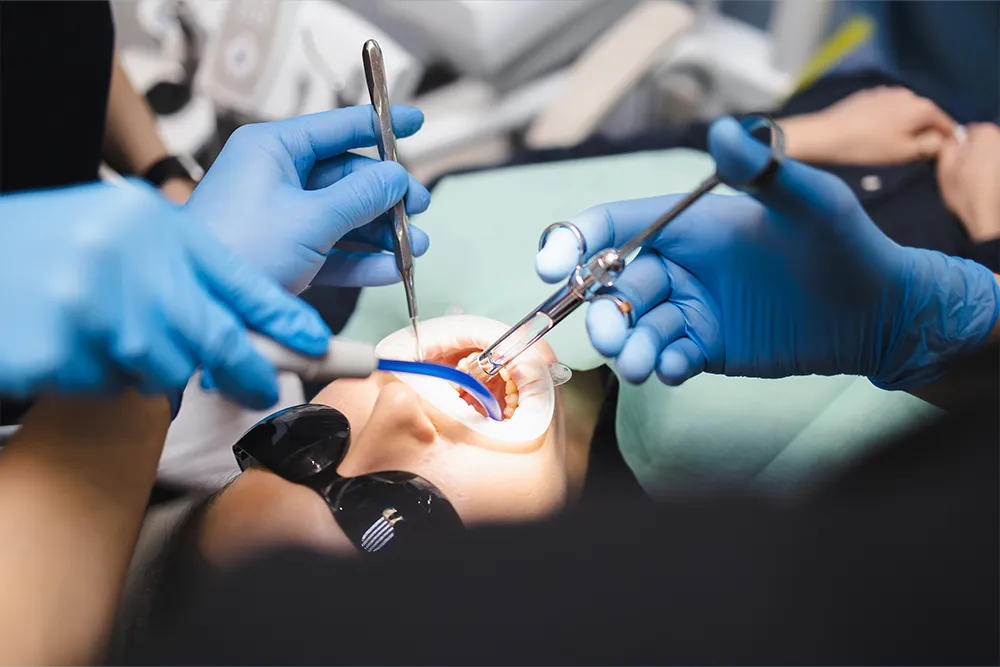
Advances in Dentistry
$10.00
Group or office purchases: Each course is tied to the account that buys it. To enroll several people, sign in as each person and complete checkout on their account (you may use the same payment method each time).
Course Overview
The field of dentistry is currently undergoing a technological and material revolution that is fundamentally changing the way clinicians diagnose, plan, and execute treatment. From the digitization of workflows to the development of "smart" bioactive materials, the modern dental practice is becoming more efficient, precise, and patient-centered. This course provides a comprehensive survey of the latest innovations shaping the industry, moving beyond traditional analog methods to explore the cutting-edge tools that are becoming the new standard of care.
Participants will explore the rapid expansion of digital dentistry, including the integration of Cone Beam Computed Tomography (CBCT) with intraoral scanning for seamless implant planning and the rise of chairside CAD/CAM and 3D printing technologies. The curriculum also delves into the shift towards minimally invasive dentistry, highlighting advanced laser therapies and air abrasion techniques that preserve natural tooth structure. Furthermore, it examines the emergence of Artificial Intelligence (AI) as a diagnostic aid, helping clinicians identify pathologies with greater accuracy and consistency.
Beyond hardware and software, this course investigates the biological advancements in restorative materials. It covers the transition from passive, inert materials to bioactive formulations that actively stimulate remineralization and healing. By understanding these developments, dental professionals can enhance clinical outcomes, improve patient comfort, and ensure their practice remains competitive in an increasingly high-tech healthcare landscape.
Learning Objectives
After completing this course, participants will be able to:
- Describe the workflow and clinical benefits of integrating CBCT and intraoral scanning technologies.
- Compare and contrast subtractive manufacturing (milling) with additive manufacturing (3D printing) in dental applications.
- Identify the indications for various laser wavelengths in both hard and soft tissue procedures.
- Explain the mechanism of action of bioactive restorative materials and their role in secondary caries prevention.
- Discuss the principles of minimally invasive dentistry, including resin infiltration and air abrasion.
- Evaluate the current applications of Artificial Intelligence in caries detection and radiographic analysis.
- Analyze the role of regenerative techniques, such as Platelet-Rich Fibrin (PRF), in wound healing and oral surgery.
- Formulate a plan to implement teledentistry and remote monitoring tools into daily practice.
Related Courses
2 Hour Infection Control
$30.00|2.0 CEU|120 min
AIDS: HIV-1 Vaccine Update
$10.00|2.0 CEU|120 min

Alzheimer’s Disease
$10.00|2.0 CEU|120 min