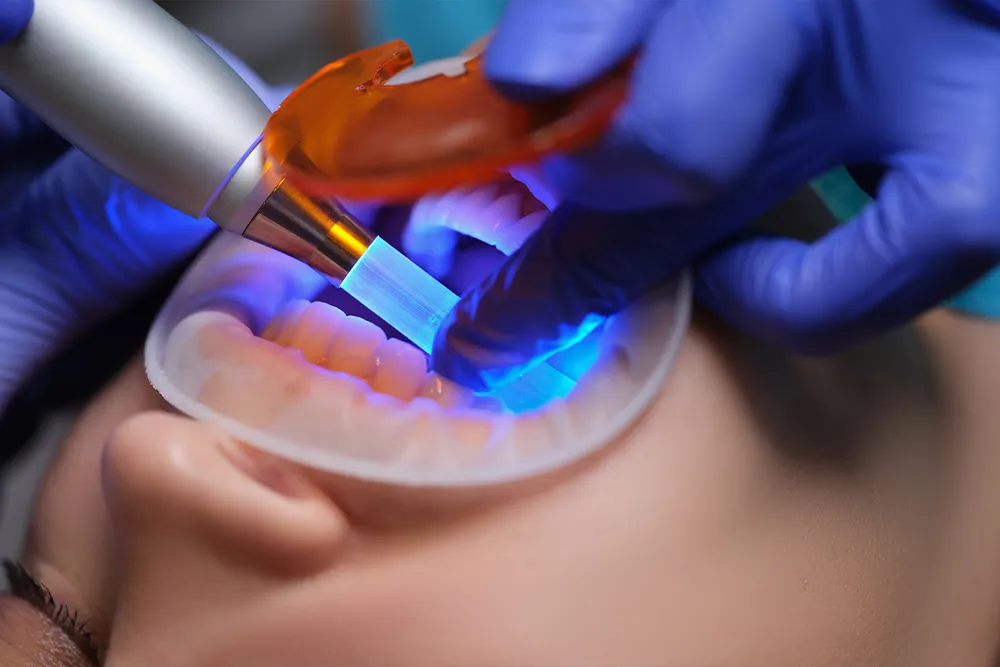
Clinical Use and Operator Impressions with Hard Tissue Laser
$10.00
Group or office purchases: Each course is linked to the account and email address used at checkout. For multiple employees or students, each person must have their own account, unique email address, and separate purchase. The same payment method may be used for all purchases.
Course Overview
Hard tissue laser systems have become an increasingly important tool in modern restorative practice. These devices allow clinicians to remove enamel and dentin, manage carious lesions, and perform other procedures with a level of precision that supports minimally invasive dentistry. As patient expectations for comfort and efficiency continue to rise, hard tissue lasers offer an alternative approach that reduces vibration and noise while still achieving reliable clinical outcomes.
Incorporating laser technology into routine clinical workflows requires a clear understanding of how lasers interact with dental tissues, how to select appropriate settings, and how to manage operator technique. Because hard tissue lasers rely on specific absorption patterns and energy delivery mechanisms, their successful use depends on correct calibration, suitable case selection, and familiarity with the laser's operational characteristics. This course will explore these foundational elements so that participants can feel confident applying them in practice.
Participants will also learn from operator impressions reported in clinical research and real world practice. These perspectives provide valuable insight into the practical strengths and limitations of hard tissue laser systems. By combining technical knowledge with clinical experience, the course prepares dental professionals to evaluate whether hard tissue lasers can enhance treatment efficiency, patient experience, and long term restorative outcomes within their own practice environment.
Learning Objectives
After completing this course, participants will be able to:
- Explain how hard tissue lasers interact with enamel and dentin based on absorption and ablation principles.
- Identify appropriate clinical applications for hard tissue lasers, including caries removal, surface conditioning, and minimally invasive procedures.
- Select suitable laser parameters such as power, frequency, and water or air settings for different treatment scenarios.
- Recognize the clinical advantages and limitations of hard tissue lasers compared to rotary instrumentation.
- Incorporate operator technique considerations that support efficiency, safety, and patient comfort.
- Evaluate safety protocols, required protective equipment, and training expectations for laser operation.
- Interpret operator impressions and patient feedback reported in the literature.
- Apply clinical examples and case insights to integrate hard tissue lasers into restorative workflows.
Related Courses
12 CEU Bundle
Original price was: $100.00.$95.00Current price is: $95.00.|12.0 CEU|720 min
2 Hour Infection Control
$30.00|2.0 CEU|120 min
25 CEU Bundle
Original price was: $170.00.$165.00Current price is: $165.00.|25.0 CEU|1500 min