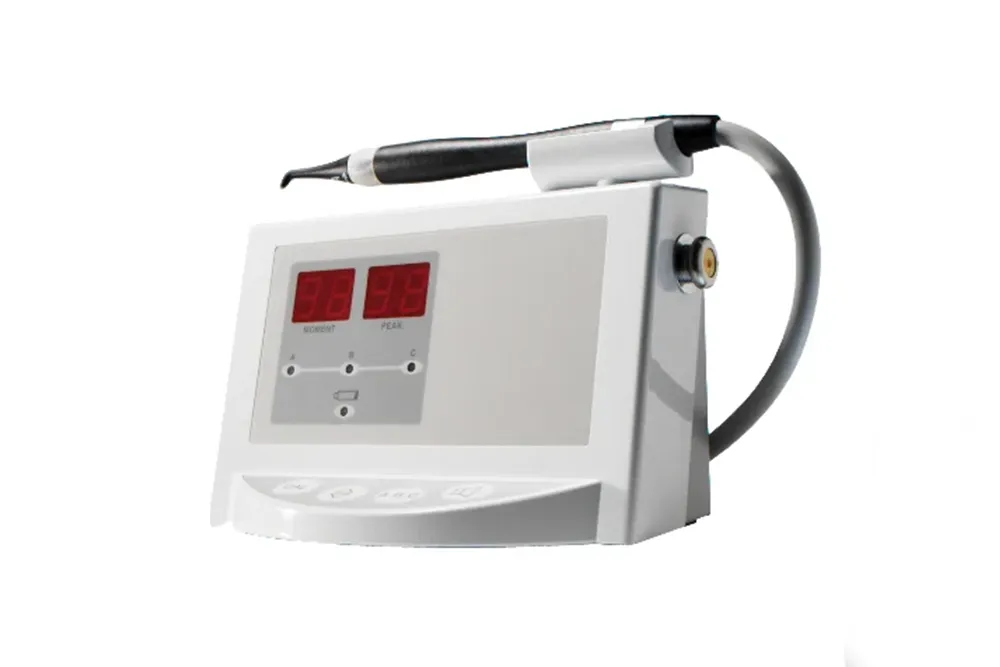
DIAGNOdent Laser Caries Detection
$10.00
Group or office purchases: Each course is linked to the account and email address used at checkout. For multiple employees or students, each person must have their own account, unique email address, and separate purchase. The same payment method may be used for all purchases.
Course Overview
The DIAGNOdent is a laser fluorescence device used for the detection of dental caries, particularly in pits and fissures where traditional explorers may fail. This course explores the science behind laser fluorescence and how it aids dental professionals in identifying carious lesions that may be missed by visual and radiographic examination alone. It covers the operational principles of the device, distinguishing between healthy tooth structure and bacterial byproducts that fluoresce when exposed to the specific wavelength of light.
Participants will learn the proper clinical technique for using the DIAGNOdent, including the critical steps of cleaning, isolation, and calibration, which are essential for accurate readings. The course emphasizes the importance of combining these numerical values with clinical judgment and other diagnostic tools. It also addresses common pitfalls, such as false positives caused by stain, calculus, or plaque, ensuring accurate diagnosis and preventing overtreatment.
Finally, the curriculum details the maintenance and infection control procedures specific to the device to ensure longevity and patient safety. By understanding the capabilities and limitations of laser caries detection, dental professionals can enhance their diagnostic accuracy, promoting minimally invasive dentistry and early intervention. This course provides the theoretical and practical knowledge necessary to integrate the DIAGNOdent effectively into daily practice.
Learning Objectives
After completing this course, participants will be able to:
- Explain the principle of laser fluorescence and how it differentiates between sound and carious tooth structure.
- Identify the specific indications for using the DIAGNOdent device in clinical practice versus its contraindications.
- Demonstrate the correct procedure for calibrating the device prior to patient use to ensure baseline accuracy.
- Describe the step-by-step scanning technique for occlusal pits and fissures using the appropriate tips.
- Analyze the numerical readings provided by the device and correlate them with appropriate treatment options.
- Recognize factors that can produce false-positive readings, such as stain, calculus, and existing restorations.
- Discuss the limitations of laser caries detection compared to traditional radiographs and visual inspection.
- Outline the proper infection control and maintenance protocols for the DIAGNOdent handpiece and optical tips.
Related Courses
12 CEU Bundle
Original price was: $100.00.$95.00Current price is: $95.00.|12.0 CEU|720 min
2 Hour Infection Control
$30.00|2.0 CEU|120 min
25 CEU Bundle
Original price was: $170.00.$165.00Current price is: $165.00.|25.0 CEU|1500 min